Ambient bread products are evaluated by international buyers because they can support distribution and retail planning without a frozen or freshly baked sales model. The commercial opportunity depends on the exact product, approved shelf life, storage conditions, packaging and route to market.
The word “ambient” should not be treated as a universal performance claim. Importers and distributors need product-specific evidence and a realistic distribution plan before deciding whether a bakery item fits their market.
What Ambient Bakery Means for B2B Buyers
In a B2B sourcing context, ambient bakery products are packaged products intended to be handled under confirmed room-temperature storage conditions. The exact condition and shelf life must come from the approved record for the selected SKU.
Ambient distribution can change the questions buyers ask. Instead of focusing only on the product itself, the review also includes:
- Shelf life remaining after transport and local handling.
- Packaging protection throughout the route.
- Storage conditions in warehouses and retail channels.
- Unit and carton presentation.
- Sales velocity and replenishment planning.
These factors make ambient bakery a product-and-distribution decision rather than a simple format label.
Why Importers Evaluate Ambient Bread
Importers often manage several stages between production and retail availability. A packaged ambient product may offer planning flexibility when its confirmed shelf life and storage conditions fit that route.
The benefit is not determined by the longest stated shelf life. Buyers should calculate the usable commercial window after production, transport, clearance, local distribution and retailer handling. A realistic plan protects product quality and reduces dependence on unsupported assumptions.
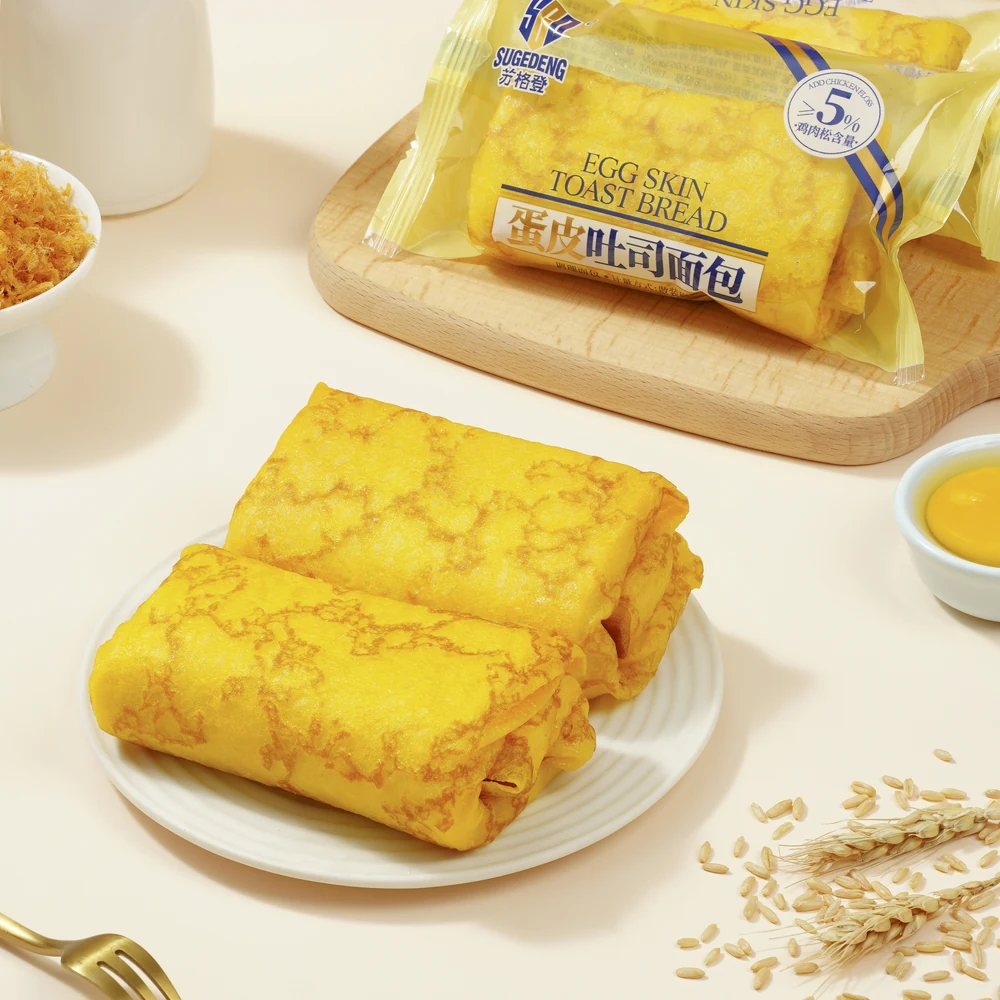
SUGEDENG's Toast Bread range and Egg-Wrapped Bread range provide published products for category review. Exact shelf life, specification and storage information must still be confirmed for the selected SKU and project.
Retail Channel Considerations
Different channels can require different pack formats, case configurations and replenishment patterns. Supermarkets may focus on shelf presentation and assortment planning, while convenience stores may prioritize compact packs and frequent replenishment.
Distributors should discuss:
- Target channel and store format.
- Expected sell-through period.
- Retail unit and display requirements.
- Carton and warehouse handling.
- Label and language requirements.
- Product-specific storage controls.
An ambient bakery supplier should ask for this context rather than assume one pack or specification fits every buyer.
Packaging Supports the Distribution Plan
Packaging protects the approved product and carries required market information. It should be reviewed together with the product specification, not added as an afterthought.
For an OEM or private-label program, buyers can prepare the desired pack presentation, artwork direction, label information and carton questions. The manufacturer can then review feasibility for the selected product.
Customer brands, export labels and market claims must not be invented. Artwork and legal claims remain subject to the buyer's own qualified approval process.
Product-Specific Shelf Life Matters
A website may show several bakery products with different documented shelf lives. Buyers should never apply a family-level value to every SKU or assume that a customized version keeps the same result.
The review should connect the shelf-life statement with the exact product, current specification, packaging and storage condition. Any change to the product or packaging may require a new confirmation.
For a deeper planning framework, read Shelf-Stable Bread: A Guide for International Bakery Distribution. That article focuses on the questions importers and distributors should review across the commercial route.
Working With an Ambient Bakery Supplier
A productive inquiry gives the supplier enough context to assess the product and route. Buyers should provide the destination market, preferred category, target specification, packaging direction, sales channel and expected order basis.
SUGEDENG supplies published bread and cake products for international B2B review. The OEM bakery manufacturing page explains how product, packaging and market requirements are evaluated without disclosing confidential formulas.
Explore the full packaged bakery product range, then contact the international business team to discuss the selected product and the distribution requirements that need confirmation.